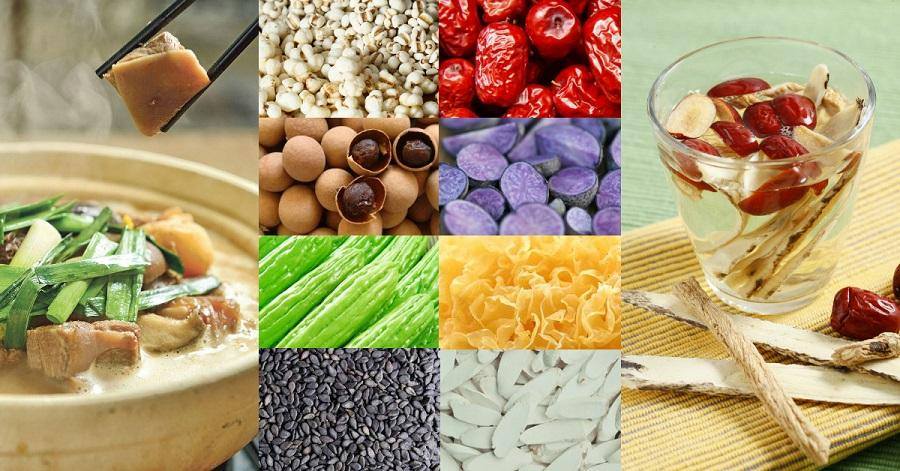
In Western nutrition, food is often described in terms of calories, vitamins, or nutrients.
In Chinese medicine, food is understood in a very different way.
For thousands of years, Chinese medicine has described food by its nature — whether it is warming, cooling, or neutral.
This idea did not come from personal opinion or intuition.
It comes from long-term observation, clinical practice, and classical medical texts that were written, discussed, and passed down over many generations.
In China, this way of understanding food shaped everyday eating habits, seasonal cooking, and long-term health care.
What Do “Warm” and “Cool” Mean in Chinese Medicine?
In Chinese medicine, warm and cool do not mean temperature.
They describe a food’s tendency within a complete medical system — how it interacts with the body according to traditional theory.
This includes its relationship with:
- Qi
- Yin and yang
- Body fluids
- Meridians (the pathways through which qi moves)
These ideas already appear in 黄帝内经 (Huangdi Neijing – The Yellow Emperor’s Inner Classic),
one of the earliest and most influential texts of Chinese medicine.
This book explains health as a dynamic balance, and food as one of the key ways to support that balance in daily life.
How Food Knowledge Was Collected and Refined
As Chinese medicine developed, doctors began to systematically record how foods and herbs affect the body.
One of the earliest examples is 神农本草经 (Shennong Bencao Jing – The Divine Farmer’s Materia Medica).
In this text, many edible substances are classified using the same principles as medicinal herbs, including warm, cool, and neutral nature.
This shows an important idea in Chinese medicine:
- Food and medicine were never fully separated
• • Daily eating was seen as slow, long-term support for health
Food, Balance, and Daily Life
Classical Chinese medical texts do not promote strict dietary rules.
Instead, they emphasize appropriateness.
In 金匮要略 (Jingui Yaolue – Essential Prescriptions from the Golden Cabinet),
the focus is on how imbalance develops when daily habits, including diet, do not match a person’s condition.
This means:
- The same food may suit one person but not another
- The same food may suit one season but not another
- Quantity and frequency matter as much as the food itself
This flexible thinking made the system practical and realistic for everyday life.
Eating With the Seasons
Dietary knowledge in Chinese medicine has always been closely connected with seasons and climate.
A well-known example is 饮膳正要 (Yinshan Zhengyao – Essential Principles of Food and Drink),
a classical text dedicated entirely to food and nourishment.
It explains how people should adjust their diet according to:
- Season
- Climate
- Physical condition
For centuries, families planned meals in this way:
- More warming foods in cold seasons
- More cooling foods when heat was excessive
- Balanced foods during seasonal transitions
This knowledge was passed down not only through books, but also through everyday cooking traditions within families.
A System Passed Down, Not a Trend
Later works continued to collect and refine earlier knowledge.
One of the most comprehensive examples is 本草纲目 (Bencao Gangmu – Compendium of Materia Medica),
which summarizes centuries of experience with herbs and foods, including their nature and function.
These texts show clearly that the idea of warming and cooling foods is not a modern trend.
It is a living medical system shaped by many doctors over many centuries.
A Different Way to Understand Food
Chinese medicine does not try to replace modern nutrition.
It offers another way to understand food — one that focuses on long-term balance rather than quick results.
In this tradition:
- Food supports qi every day
- Small habits matter
- Health is something you maintain, not something you fix
For thousands of years, this way of thinking guided how people in China ate, cooked, and cared for their health — quietly, steadily, and continuously.
If you want to experience TCM treatment in Eindhoven, you can learn more about my services by clicking here.